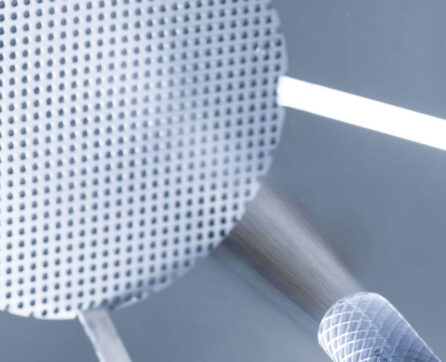
Filtration Testing

Our air filter testing services cover HVAC, engine, and turbine applications according to ISO 16890, ISO 5011 and EN 779. Our accredited lab measures filter efficiency, pressure drop, and dust capacity with precision instruments and industry standard test equipment for filter performance validation.

How Efficient Are Your Filters?

As the only laboratory in the UK to hold UKAS accreditation to ISO 17025:2017 for filter testing, Particle Technology is the recognisable choice for assessing the essential performance characteristics of filters. We specialise in filter performance testing across a range of applications, including HVAC units, gas turbines, internal combustion engines and compressors.

Air Filtration Testing for HVAC Systems

The Importance of Air Filtration Testing

Air filters play a crucial role in HVAC systems, ensuring the quality of indoor air. Our air filtration testing process covers key parameters, such as:

  • Initial efficiency
  • Discharged efficiency
  • Airflow resistance (differential pressure across the filter)
  • Test dust capacity
  • Arrestance

Classification & Reporting

Your results will be presented in a formal filter test report, which also includes the official filter classification:

  • G1 to F9 in accordance with EN 779:2012, or
  • ePM1, ePM2.5, ePM10 and ISO Coarse classifications in accordance with ISO 16890

Air Filter Testing


Advanced Testing Capabilities

Our test facility includes state-of-the-art equipment with the capability to test air filters beyond the requirements of EN 779 and ISO 16890. Our capabilities include:

  • A powerful 35 kW fan generating up to 17,000 Pa of pressure
  • Oil and salt aerosol generators for precise filter efficiency determination
  • Particle counting using PALAS Welas 3000 with a measurable range of 0.2 µm to 100 µm
  • TOPAS TDC 584 cabinet for IPA vapour discharge process
  • TOPAS SAG 440 dust feeder for varied dust concentrations

state-of-the-art equipment with the capability to test air filters

What is filter testing?

Filter testing evaluates the performance of air filters by measuring their efficiency, dust-holding capacity, pressure drop, and other critical parameters under controlled conditions. It helps ensure your filters meet required standards and function effectively in their intended environment.

We can design and manufacture bespoke filter housings tailored to your specific needs.

Get In Touch

Solid aerosol dust dispersed in duct with compressed air venturi injector

Air Filter Testing for Internal Combustion Engines & Compressors

Efficient inlet air cleaning is vital for internal combustion engines and compressors to prevent breakdowns. Our experience in filtration testing, adhering to ISO 5011:2020, ensures accurate evaluations with a range of materials and calibrated dust feeders.

For both large or small air filters without available housing, we design and manufacture bespoke filter housings to meet your specifications.

Air Filter Test for Gas Turbines

Protecting gas turbines from damaging particles is critical. Our bespoke duct insert allows testing of cone or cylinder filter elements in accordance with EN 779 and ISO 16890:2016. We go beyond standard requirements, conducting extended filter performance.

 testing with final differential pressures up to 6000 Pa and elevated dust feed rates.

Filter Testing FAQs

What is filter testing?

Filter testing evaluates the performance of air filters by measuring their efficiency, dust-holding capacity, pressure drop, and other critical parameters under controlled conditions. It helps ensure your filters meet required standards and function effectively in their intended environment.

What standards do we test to?

We are the only UK laboratory with UKAS accreditation to ISO 17025:2017 for filter testing. Depending on the application, we test filters according to:

  • ISO 16890 (ePM1, ePM2.5, ePM10, ISO Coarse)
  • EN 779:2012 (G1 to F9 classifications)
  • ISO 5011:2020 (Gravimetric efficiency, test dust capacity, differential pressure) 

What types of filters can we test?

We test filters used in:

  • HVAC systems
  • Gas turbines
  • Internal combustion engines
  • Compressors
    Whether you have small units or large-scale industrial filters, we have the facilities to accommodate your requirements.

What performance parameters do we measure?

Our tests assess:

  • Initial and discharged efficiency
  • Differential pressure (airflow resistance)
  • Test dust-capacity
  • Arrestance
  • Filter classification
    We provide results for accredited testing in a formal, standards-based filter test report.

Do you need to supply a filter housing?

Yes. If your filter does not have a compatible housing, we can design and manufacture bespoke filter housings tailored to your dimensions and requirements.

Do we test filters for gas turbines?

Absolutely. We use a bespoke duct insert system to test cone or cylinder elements, in accordance with EN 779 and ISO 16890:2016. We can simulate extreme conditions with differential pressures up to 12 kPa and increased dust feed rates for robust performance testing.

Why is filter testing important?

Effective filtration reduces downtime, extends equipment life, and ensures compliance with air quality and industry standards. 

Whether you’re in HVAC, aerospace, energy, or manufacturing, validating your filters protects both your equipment and your reputation.

Want to find out more?

We regularly present and exhibit at industry-leading events, including the Filtration Society Conference and the Particulate System Analysis Conference. Stay updated on our upcoming event schedule to connect with our technical team in person.

To see how we apply the latest standards and research in practice, you can read about our previous conference contributions and exhibition highlights here:

Get in Touch

With industry-leading expertise in filter testing, we ensure accurate, reliable filtration test results tailored to your specific needs. Contact us today to discuss your requirements.

Get in touch
Particle Technology
Privacy Overview

This website uses cookies so that we can provide you with the best user experience possible. Cookie information is stored in your browser and performs functions such as recognising you when you return to our website and helping our team to understand which sections of the website you find most interesting and useful.